
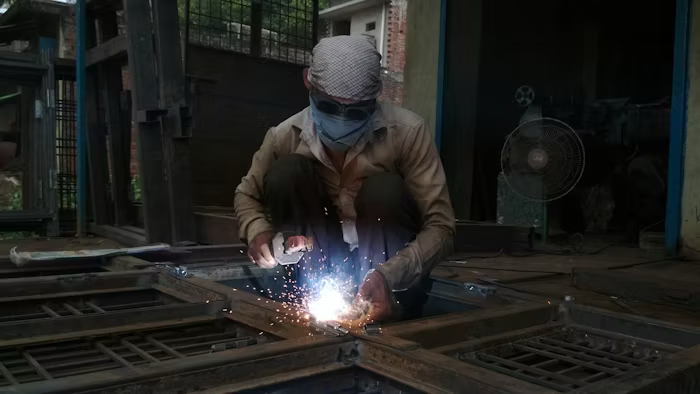
For years, metal repairs in factories meant heat, sparks, and stopping the whole system. But what if you could fix the equipment without burning or high temperatures? That is what cold welding technology is all about. This new technique repairs metal constructions without the dangers and difficulties associated with normal welding.
Knowing the benefits of cold welding and the right time to use it can save your operation a lot of time, money, and trouble.
Understanding Cold Welding Technology
What Is Cold Welding?
Cold welding consists of repair processes that provide adhesion of metals to metal substrates without the use of heat. The term includes various technologies as well as different materials. The similarity is in the strong bonds created at ambient temperature instead of using the melting of the metal.
How It Differs from Traditional Welding
On the other hand, the traditional welding process is the melting of both the base metals and the filler material, which, thus, creates a metallurgical bond but requires, nonetheless, very high temperatures of thousands of degrees. The heat-affected zone around the welds induces stress points and also changes the physical properties of the materials.
High-Performance Polymers in Industrial Repairs
Material Properties and Capabilities
The use of high-performance polymers for cold welding applications gives the materials very good quality characteristics. The polymers are the only ones that can withstand the chemicals that would totally kill normal materials. The polymers do not lose their strength at extreme temperatures. They can be of help in bonding the metals under the harshest conditions.
Compressive strength is one of the characteristics, and it can be more than 10,000 PSI in some specific formulations. That strength is more than enough to withstand great loads and pressures. The materials are also able to absorb the impact and vibration better than you would expect from a polymer.
Chemical and Temperature Resistance
Industrial environments are often harsh places for the equipment, as they subject it to very harsh chemicals. The high-quality polymers that can take all that, however, are the ones that are made to survive acid, base, and strong solvent and hydrocarbon exposure. So, they are very much around in the process industries doing repairs because of their property of not disintegrating for a long time, regardless of the chemical environment.
By the way, temperature capabilities are determined by the particular formulation of the polymer. Some products can withstand continuous use up to 300°F or even more and not break down. Others are created for working at very low temperatures. Therefore, it is essential to choose the right material for the specific temperature if you want to get the best out of the whole thing for a long time.
Applications for Repairing Metallic Structures
Pipe and Vessel Repairs
Pipe and vessel leaks are a common problem in every industrial plant. One way out is cold welding, providing a fast and effective way to repair without the need for system draining or extensive shutdowns. You can fix the corrosion damage, the cracks, and even small holes when the systems are still pressurized.
The repair compound takes the shape of the uneven surface and goes deep into the damaged parts. It results in a barrier that is strong enough to resist the internal pressure. Depending on how bad the damage is and how high the pressure is, cold welding can be either a permanent repair or a temporary fix until the next maintenance.
Pump and Valve Restoration
Wear and cavitation slowly start to damage the pumps and valves. It is not economically wise to replace the whole equipment when only certain spots are damaged. Cold welding restores the worn surfaces and gives the right clearances.
Pump casings can be layered where erosion has caused problems. Valve seats can be fixed up. Propellers can be repaired. Such precise repairs, much less costly than replacement, prolong the life of the plant equipment.
Structural Repairs and Reinforcement
Corrosion eats at the supports of a structure and thus weakens the whole thing, including the frames of the mechanical parts. Cold welding adds metal thickness back and, at the same time, protects the area from corrosion. The polymer coating is the barrier against corrosion further penetrating the repair area.
Application Techniques and Best Practices
Surface Preparation Requirements
The success of cold welding applications hinges on surface preparation, as it is the essential step. The metal has to be perfectly clean and well roughened. Even a slight presence of oil, mill scale, or rust acts as a barrier to a strong bond.
The most effective surface preparation comes from abrasive blasting. It not only gets rid of the contaminants but also forms the required surface profile for mechanical bonding. By chemical cleaning alone, one will not be able to prepare the structure adequately for repairs.
Mixing and Application Methods
Mixing of two-part systems must be done following the manufacturer’s instructions to the letter. Wrong proportions or not enough mixing will result in a weak repair. Always use the right mixing equipment and apply the right techniques to produce a consistent material.
The mode of applying repairs changes with the type of repair. A trowel is the most suitable tool with which to fill large areas. Brush application is good for coating applications. Material may be built up in layers for some repairs. Decide on your way forward according to the particular repair demands.
Curing and Service Conditions
The length of the curing period is determined by the temperature and the particular product. The curing process is sped up by warmer temperatures. Cold temperatures, on the other hand, slow it down very much. So plan your repairs accordingly.
It is not uncommon for full-strength development to take 24 hours or more. Do not hurry equipment back into use before the repair has achieved full curing. Premature loading can spoil the repair. Abide by the manufacturer’s recommendations for the cure time before returning the product to service.
Quality Assurance Steps
You shall take photos and make notes to document your repairs. Also, note down the materials used, surface preparation methods, and application conditions. This documentation will help you to monitor repair performance and make maintenance decisions accordingly in the future.
Perform inspections on repairs from time to time to make sure that they are still working correctly. Check carefully for disbonding, cracking, or any other types of problems. Timely problem detection provides the possibility of taking corrective measures before failures occur.
Limitations and Considerations
When Traditional Welding Is Necessary
Cold welding technology has a limit. It cannot be used for the primary structural welds inside pressure vessels. It does not meet the regulatory requirements for numerous applications that are under control. After realizing these limitations, consider whether cold welding is a good option for critical repairs.
Polymers may not be capable of bearing the same stress as the application. Repair in places that endure extreme cycling or vibration might not last as long as expected. Carefully assess the loads and conditions before choosing repair methods.
Preparation and Environmental Requirements
The quality of surface preparation has a direct correlation with repair performance. Not doing proper prep results in weak bonds and early failures. Set aside proper time and resources for surface preparation done right.
Environmental conditions during application also play a role. The curing and bonding might be adversely affected by high humidity or extreme temperatures. For optimal results, work within the range of the product’s specified application conditions.
FAQ
How long do cold welding repairs last?
If the repairs are done properly, they can endure for many years in the right applications. The life of the repair is dependent on the selection of the materials, on the preparation of the surface, and on the conditions of service. There are repairs that are permanent, while others are just temporary solutions.
Is it possible to perform cold welding on any metal?
The process of cold welding is applicable to almost all the common industrial metals like steel, stainless steel, cast iron, and aluminum. The choice of the substrate must be taken into consideration for surface preparation and material selection.
Is it necessary to undergo special training for the application of cold welding materials?
The basic application only needs a little training, which mainly consists of following the instructions given by the manufacturer. Formal training and experience are required for complex or critical repairs. Several suppliers provide training programs for their products.
Conclusion
The technology of cold welding is an immense help to maintenance teams in industries. They can repair metallic structures in a fast and safe manner. The combination of cold welding with high-performance polymers results in repair capabilities that are comparable to traditional welding.
Knowing when to use cold welding versus conventional repairs is really the key to maintenance efficiency. These technologies are best in circumstances when traditional welding is not feasible, dangerous, or extremely slow. They are quick, safe alternatives that do not interrupt the flow of operations.
The success depends upon the correct choice of material, the thorough surface preparation, and the right application techniques. If done correctly, cold welding repairs can last for a long time, offering significant time and cost savings. Being able to add these capabilities to your maintenance toolkit will very likely help to keep your machines running.
